Language Development in Children with Communication Disorders
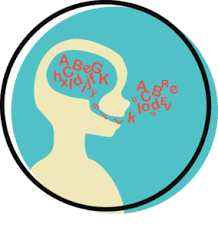
Nowadays the cases of communication disorders appear more frequently, and children start to face such problems in the early childhood. Overall, it is important to state that the problems of language disparities in children require additional attention and research in order to find clear solutions. Having studied several sources focused on the problem under analysis, it can be predicted that to understand the nature of communication disorders among children, it is important to define all the possible issues and consider the history of language development in general. Much research has been conducted in the sphere of language development and disorders identification with the purpose of understanding how the problems occur and whether it is possible to prevent them. The early identification of the language development problems in children and understanding of the possible outcomes can assist in decreasing behavioral, reading, and other problems in children which will lead to problem prevention. There are many of argumentative essay tips that are based on this topic. The main idea of this paper is to consider language learning development problems of children paying attention to the development of the phonological concern, the communication disorders, and language problems which may cause serious communication impairments.
It is a well-known fact that language learning is a natural process. Apparently, an infant has to undergo several stages in order to acquire the necessary language skills. Before starting the discussion of language development and the problems which usually occur, it is important to understand the main communication disorders children can develop. While learning language, children need to develop the main units which compose a language. First of all, children listen to the phonemes and try to repeat them without any conscious understanding of what is happening. In fact, the development of child’s acquisition of phonology is a complicated process which is the initial step in the language skills development. Thus, listening to the phones, a child refers to cognition to fit the phonemes to the meaningful units. Moreover, one needs to understand which specific units require studying initially. Usually, at the second year of life, all children already have a clear understanding of what specific language units one needs to study. Apparently, these are grammar building units, which further can help children compose words and phrases. It should be noted that even though the basic grammar rules can be seen from the language adults use, children can usually acquire the basic syntactic categories as well, even though it is a more complicated issue. The acquisition of a new language for children is not simply the process of learning the sequence of tenses, since it requires the involvement of additional thinking processes. Overall, while learning a language, a child uses the information they hear in their environment, namely in the family and society. However, none of these theories, neither the family nor the social one, replies to a question how a child learning a language can comprehend grammar and syntax rules.
The process of language learning has not been studied till the end and much research is required in this sphere. Particularly, communication disorders require additional attention, since children being placed in the same conditions still can experience problems. Moreover, the reasons for the development of different disorders have not been completely identified that leads to the difficulties in defining the existing treatment techniques. The definition of the communication disorder is defined by the problems connected to receiving, sending, and interpreting information obtained via a verbal, nonverbal, or graphic system. The main types of communication disorders which exist in the modern practice are speech, language, and hearing disorders. In fact, children with different types of disorders face numerous problems. Thus, having understood the specific problems children face, the scholars can assist in preventing further issues and treating these disorders. Since the causes of problems have not been studied yet, the possibility of considering the issues to prevent the problems can be a good reason for studying the language development imparities among children.
Identifying problems in communication as “specific language impairment”, “specific expressive language impairment”, or “slow expressive language development”, language development is not connected to any cognitive disparities, and the only problem is difficulty in learning a language. Even though much research has been conducted in the sphere, no specific causes of language learning disparities have been identified. While studying the problem of toddlers with delays in language, much research has been conducted with the purpose of understanding what recommendations can be implemented in order to improve the situation and what consequences can be seen. The study has proven that language development problem is not related to the cognitive processes, which is a very important conclusion.
One of the issues children with communication disorders face is the behavioral problem. According to the research, 34% of children with language development impairments aged 4-6 had behavioral problems, namely social issues, as well as problems connected to depression, thought, attention and delinquency. Aggressive behavior was also identified as one of the problems children faced. The research has proven that earlier identification of the issue and the actions taken in order to improve the situation can help children avoid behavioral problems as the risk of psychiatric disorder among speech- or language-impaired children will increase as a function of the underlying severity of the neurodevelopmental immaturity – the more limited and specific the impairment, the milder the neurodevelopmental delay and the better the prognosis. Being unable to communicate with children of their age in a proper way, children are inevitably experiencing difficulties, which are reflected in behavioral disparities. However, there are other consequences people may face in their lives.
Despite behavioral issues, children with language development problems also faced the problems of reading disabilities. The research conducted by a group of scientists has studied the influence of language development problems on children at the second and fourth grades. Children who had some problems with language development at the early stages showed serious reading problems in the future. It was significant for the researcher to see that children with nonverbal and language deficit experienced much more considerable reading problems in the future compared to children with language deficit anole. The understanding of this problem as a significant aspect of study can help scholars develop special reading programs for the second and fourth grades aimed at meeting the needs of children with language development problems. In fact, reading is one of the basic skills children should acquire during studying. Hereby, the failure to acquire this competence adequately can violate the whole studying process and fail to satisfy the learning needs and purposes. Consequently, being aware that children with language development problems can have reading problems, teachers will be able to improve learning system and create adequate conditions for students.
Another research was conducted among children aged 4-6 with the purpose of seeing how the problems in language development at an early age can affect learning problems in students aged 8-11. Different scientists have studied the effect of speech sound disorder on children’s learning abilities in the future. The research results have shown that the problems connected to syntax and word repetitions at an early age triggered poor performance in school in general. Thus, those children who had general problems in phonology, syntax and semantics at an early age showed serious reading problems in the future. Furthermore, phonological problems in childhood affected spelling impairment in the future. As a result, such research outcomes may help develop special learning programs for children in need. Moreover, having the research results with specific difficulties children have and the particular consequences in the future it may lead to, the information from the research results can be used for creating special educational programs for students in need. Therefore, despite the fact that there are the results related to most of the competencies, additional research is still required in order to have the whole picture and to insure that the sample is extended enough to be able to generalize the research results and to base the educational program for children with special needs on it.
Although a child might have language development disparities and reading problems, it does not mean that they have mental disorders and require treatment. The understanding of this particular aspect is an important factor in problem understanding. Children with reading problems may be affected by a particular intervention; however, it does not mean that mental disorder practices should be applied. Apparently, the understanding of the nature of the language development problem is simply one of the vital steps in acquiring the necessary solution. Having an intention to resolve the problem of language development disorder and to guarantee that children are treated appropriately, much research is still required, even though some implications have already been done. Despite having special education programs related to reading, teachers should pay attention to early literacy issues and clinical interventions.
Having analyzed the research results and having seen how language development problems may influence further learning of children, it is important to conduct research to understand the smallest changes which may occur in the future of children learning and to see how the program can be changed to improve the situation and assist children with language development disorders. Having considered the effect of language development disorders on reading, speaking and behavior, additional research should be conducted for understanding how learning development problems can influence writing, perception, and listening issues. Moreover, basing on the current research, it is possible to develop an intervention which necessitates children aged 4-6 with language development problems study harder in the spheres they are predicted to have impairments in the future. Such program requires much work and some additional research as there is no results based on the important learning competencies.
In conclusion, having analyzed several research projects aimed at studying the effect of language learning disorders on future students’ success in learning, it was concluded that additional studies are required. The research results have shown that problems with language learning at an early age can trigger reading and behavioral problems at an older age. The research results have also proven the development of phonology, syntax and semantics problems among students aged 8-11 in case they experienced language development problems at an early age. The information obtained from these research results is helpful in learning program development. Paying much attention to mental disorders and learning needs of such children, not much research has been conducted in order to meet the needs of children with learning development needs. The development of the intervention program with the purpose of meeting the needs of children with learning disorders will be the first step in developing a new educational program for children with communication development disorders.
Comments
Post a Comment